Exploring Narrative Visualization
Balancing Structure and Intergenerational Connection Across Media
Created for the University of Cincinnati's College of Design, Architecture, Art, and Planning (DAAP), this thesis investigates how the design medium shapes narrative visualization through a deeply personal dataset: four generations of family heirlooms carried across borders and passed down through time. How do you visualize this story when your data is a dish set?
Narrative visualization sits at the intersection of data, design, and storytelling, addressing a gap that charts and graphs alone cannot fill. It combines author-driven structure with reader-driven exploration to move an audience from understanding information to connecting with it.
This thesis investigates how designers can balance structured storytelling with open-ended exploration across print, digital, and physical media. Using 54 family heirlooms passed down through four generations of an Eastern European immigrant family as case-study data, a research-through-design methodology generated insights into how medium constraints shape narrative balance and why visual form reveals patterns invisible in data analysis alone.
Role
Designer & Researcher for Master’s Thesis Project
Tools Used
Adobe Illustrator, Adobe InDesign, Figma, Microsoft Excel
Personal Background
My family history centers on immigration and preservation. After World War I, the Dzuricsko, Cumeric, Hartsky, and Novak families immigrated from Eastern Europe to the United States, carrying practical objects in their trunks and building a new life with dishes for daily meals, tools for the garden, and cameras to document new moments.
Over four generations, these utilitarian items accumulated emotional meaning through use and association, becoming heirlooms that bridged past and present.
This project began as an attempt to showcase that - to find a visual form that could honor the complexity, non-linearity, and emotional weight of objects that meant something different to every person who held them.
Project Scope


Project Goals
Ground the research in Segel & Heer's author/reader spectrum, a framework describing the balance between designer-driven narrative and reader-driven exploration, and extend it across print, digital, and physical media
Build a dataset from family objects, stories, and memories across four generations
Develop print, digital, and physical visualizations through a research-through-design process
Demonstrate that the medium is not incidental; it is the central design decision
Research Methods
Primary Research
Autoethnographic reflection on personal memory and family connection
Object-centered interviews with five family members across three generations
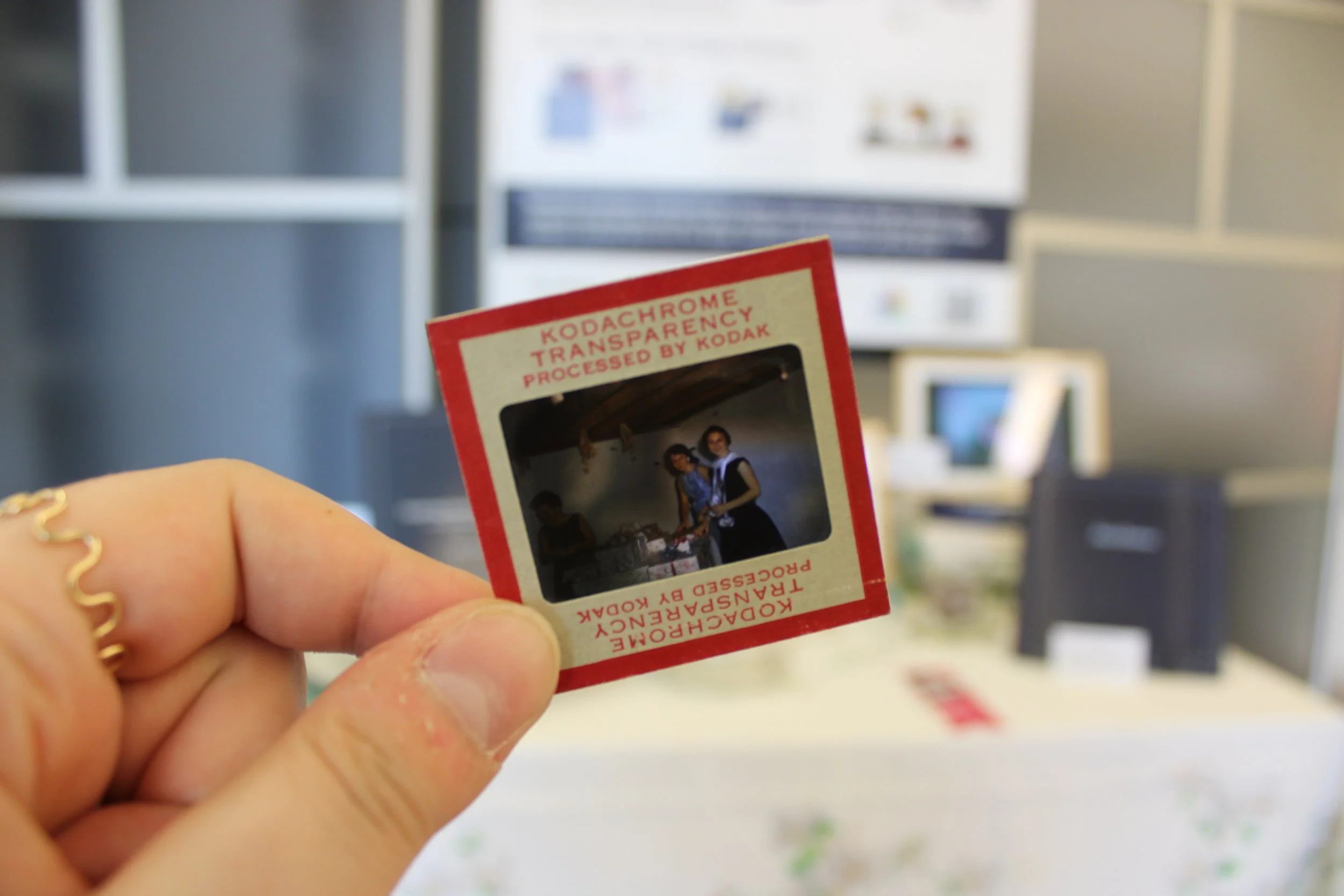
Artifact analysis of 54 heirlooms documented by material, acquisition period, and ownership history
Secondary Research
Supplemental history-focused research on artifacts
Project Outcome
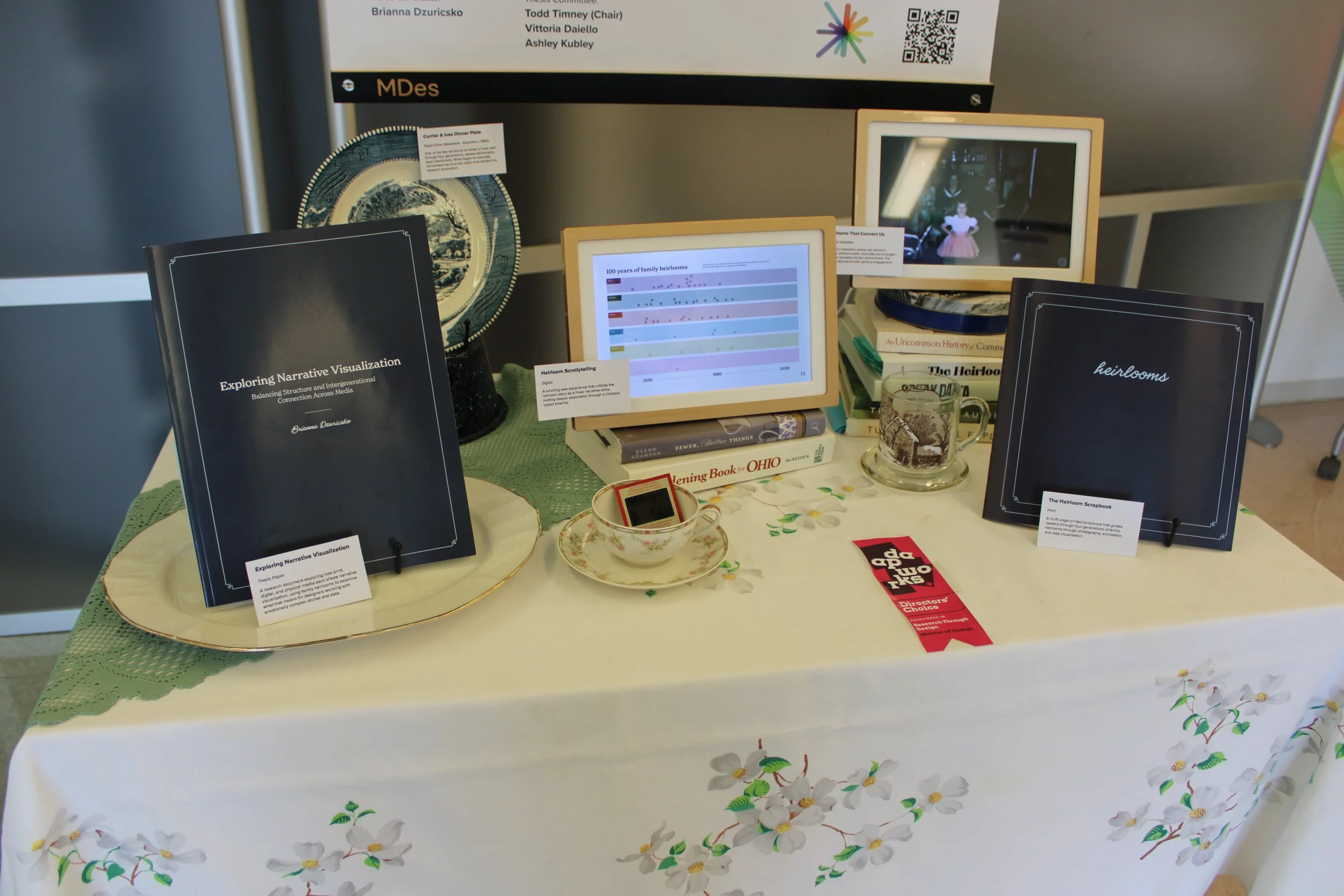
Three finished narrative visualizations, a print heirloom scrapbook, a digital scrolling story, and an immersive physical exhibition, alongside a thesis document and defense presentation demonstrating that the choice of medium determines the depth, structure, and interaction with the story.
Research-through-Design Process
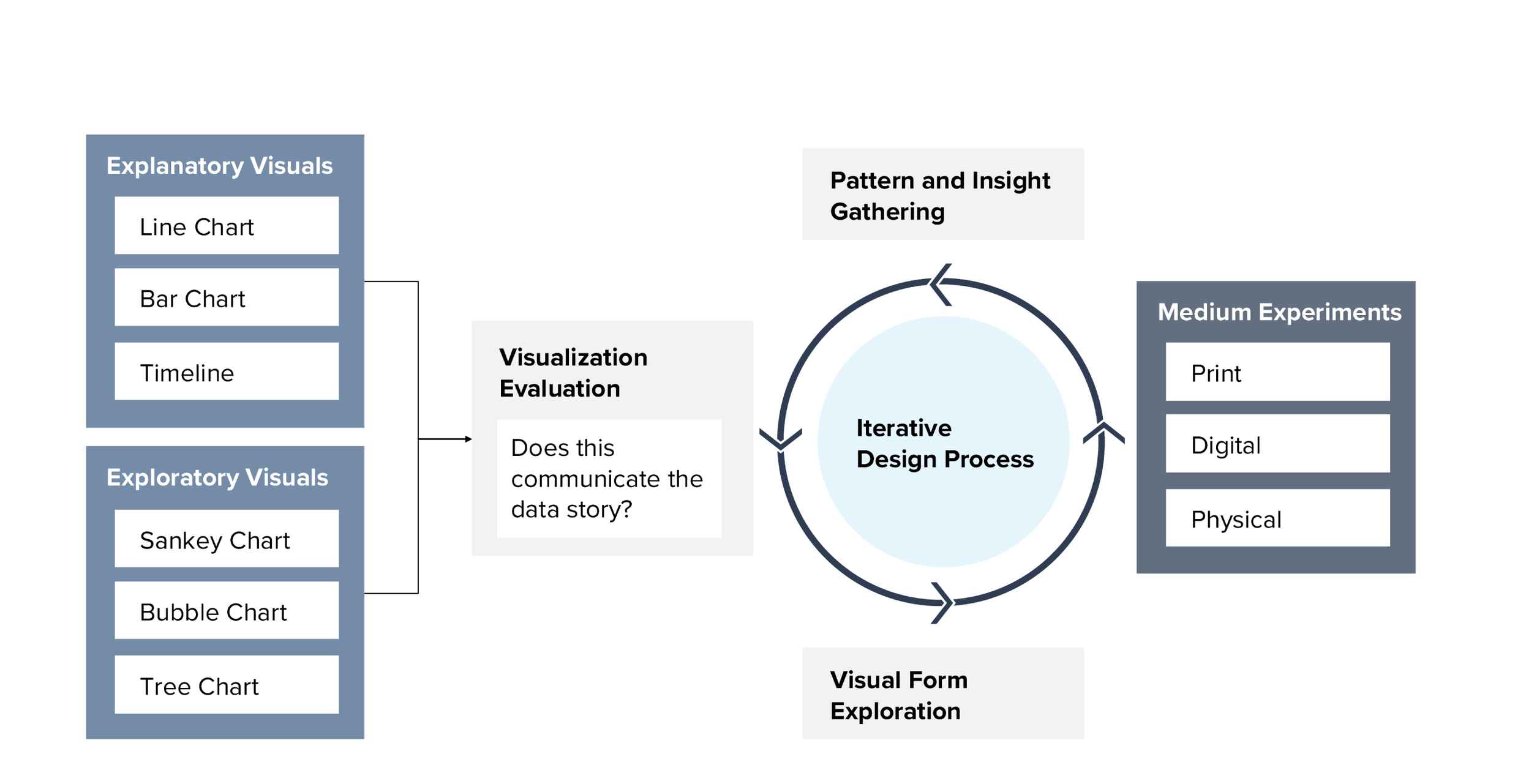
This research followed an iterative loop, moving between data collection, visualization prototyping, and reflection, where each design decision fed back into the story and shaped the next.
DATA COLLECTION AND RESEARCH METHODS
RESEARCH-THROUGH-DESIGN PROCESS
RESEARCH & DISCOVERY
Understanding Heirloom Data
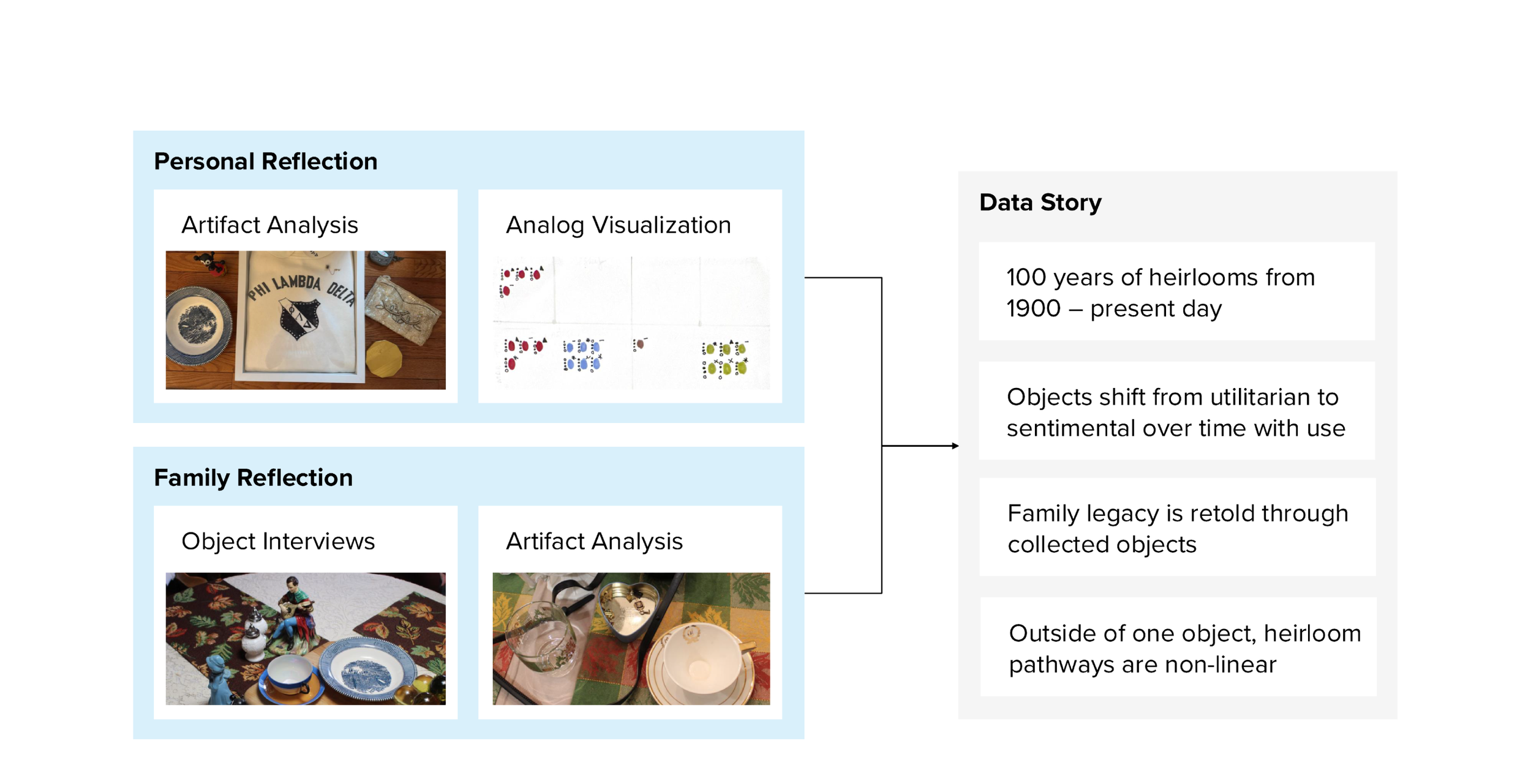
54 objects. 100 years. Four generations. Objects evolved over time, shifting from utilitarian to sentimental, each one accumulating stories with every generation. The data, alive with meaning and rich with story, demanded a different design approach to form and honor the intergenerational connections of family legacy.
Data collection drew from three methods: autoethnographic reflection capturing personal memory and family connection; object-centered interviews with five family members across three generations, revealing how meaning shifts depending on who tells the story; and physical examination documenting all 54 heirlooms by material, acquisition period, ownership history, and significance.
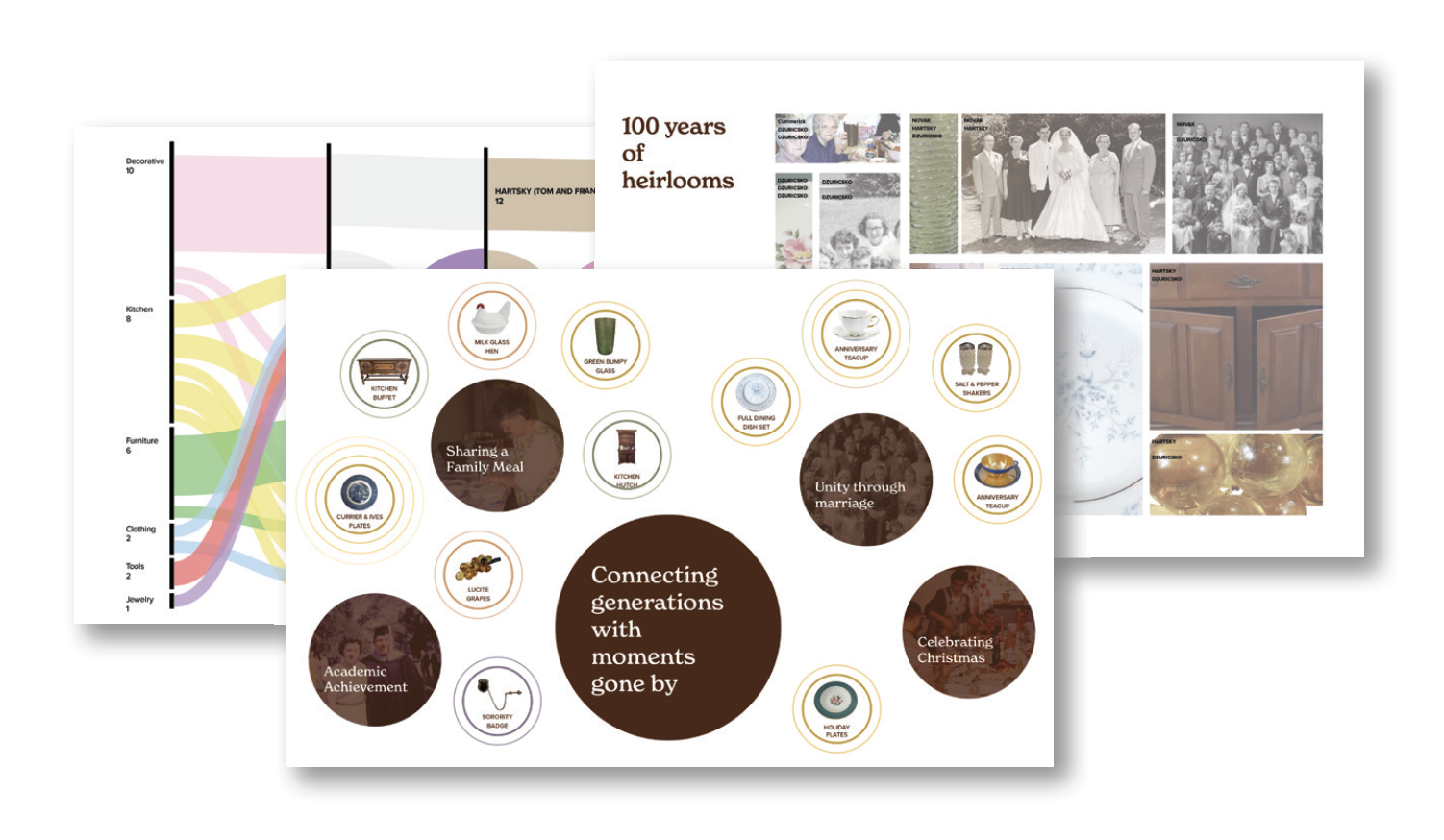
Three patterns emerged: 70% of heirlooms began as utilitarian objects that accumulated emotional meaning through use; most followed non-linear transfer pathways, skipping generations or returning to earlier holders; and the same object held entirely different significance depending on the generation describing it.
Research through Design with Data
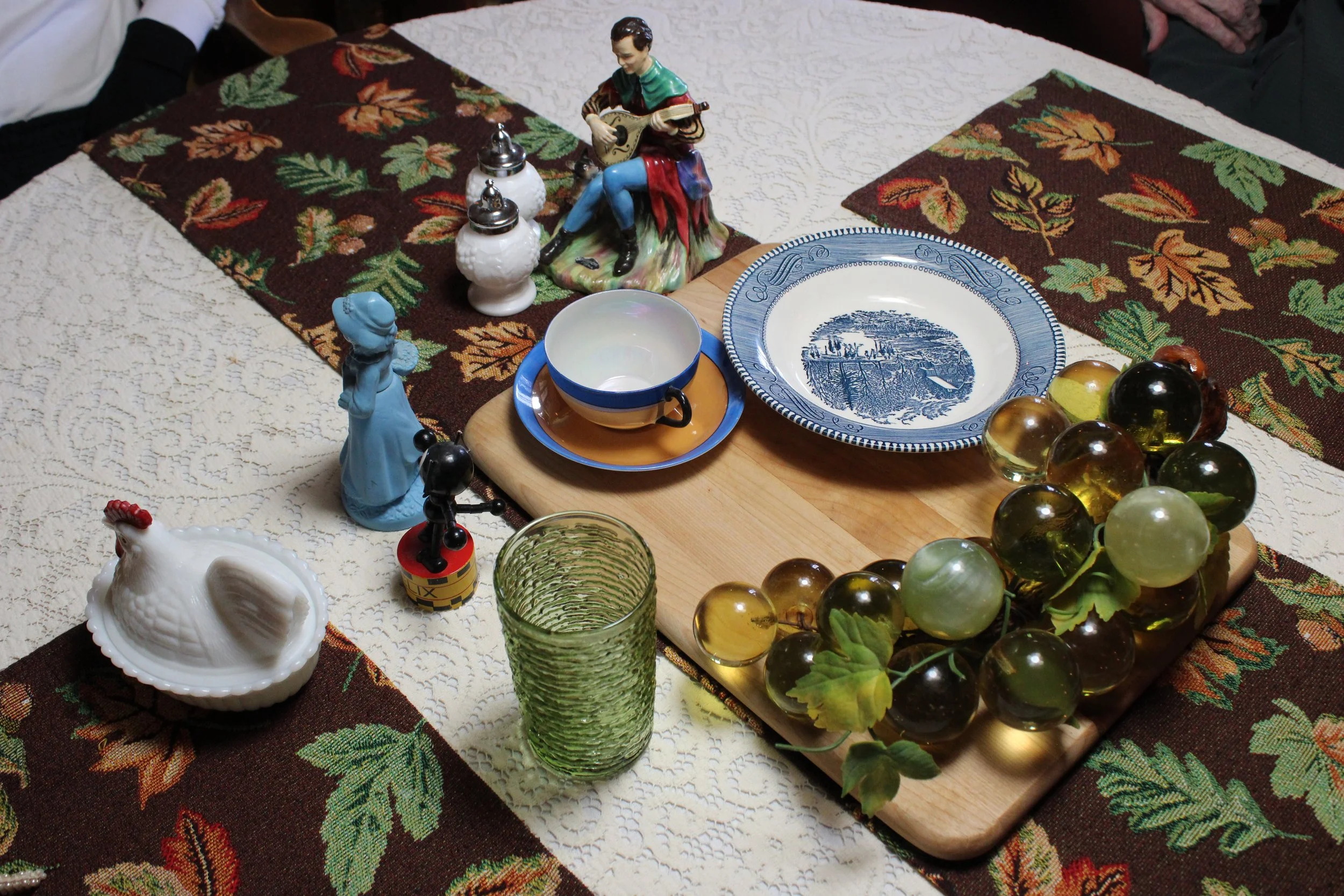
Autoethnographic reflection and object-centered interviews with five family members yielded a dataset of stories, allowing a spreadsheet to capture objects that skipped generations, changed meaning with every hand, and carried histories their owners never intended.
The dataset led the design process. After visualization surfaced patterns, those patterns revealed new dimensions of the story, the scale of utilitarian origins, the complexity of transfer pathways, the divergence of meaning across generations. Each iteration connected back to the data story to ensure clear, consistent communication. Different visual forms surfaced different truths about the same objects: form is a research method, not just a display choice. Three distinct prototypes emerged.
DATA ANALYSIS

ITERATION AND DELIVERABLES
Three Media. Three Design Outcomes.
Exploring multiple chart types made one thing clear: different forms surface different truths about the same data. That insight extended to medium itself. As patterns emerged from the data, they revealed new dimensions of the story: the complexity of transfer pathways, the divergence of meaning across generations, the weight of objects that outlived the people who carried them. The story itself pointed toward the form it needed. Three distinct prototypes emerged from that understanding, each continuously connected back to the data story through iteration and reflection to ensure the design remained grounded in what the objects and the people behind them were actually saying.
Print relied on visual hierarchy to create reader agency without interactivity. Digital used a default scrolling narrative paired with optional filters and exploration. Physical installation used spatial arrangement, suggested pathways, varied scale, open viewing angles, to guide without enforcing. Each format went through multiple rounds of testing; balance wasn't planned in advance, it emerged through making.
Print: Heirloom Scrapbook
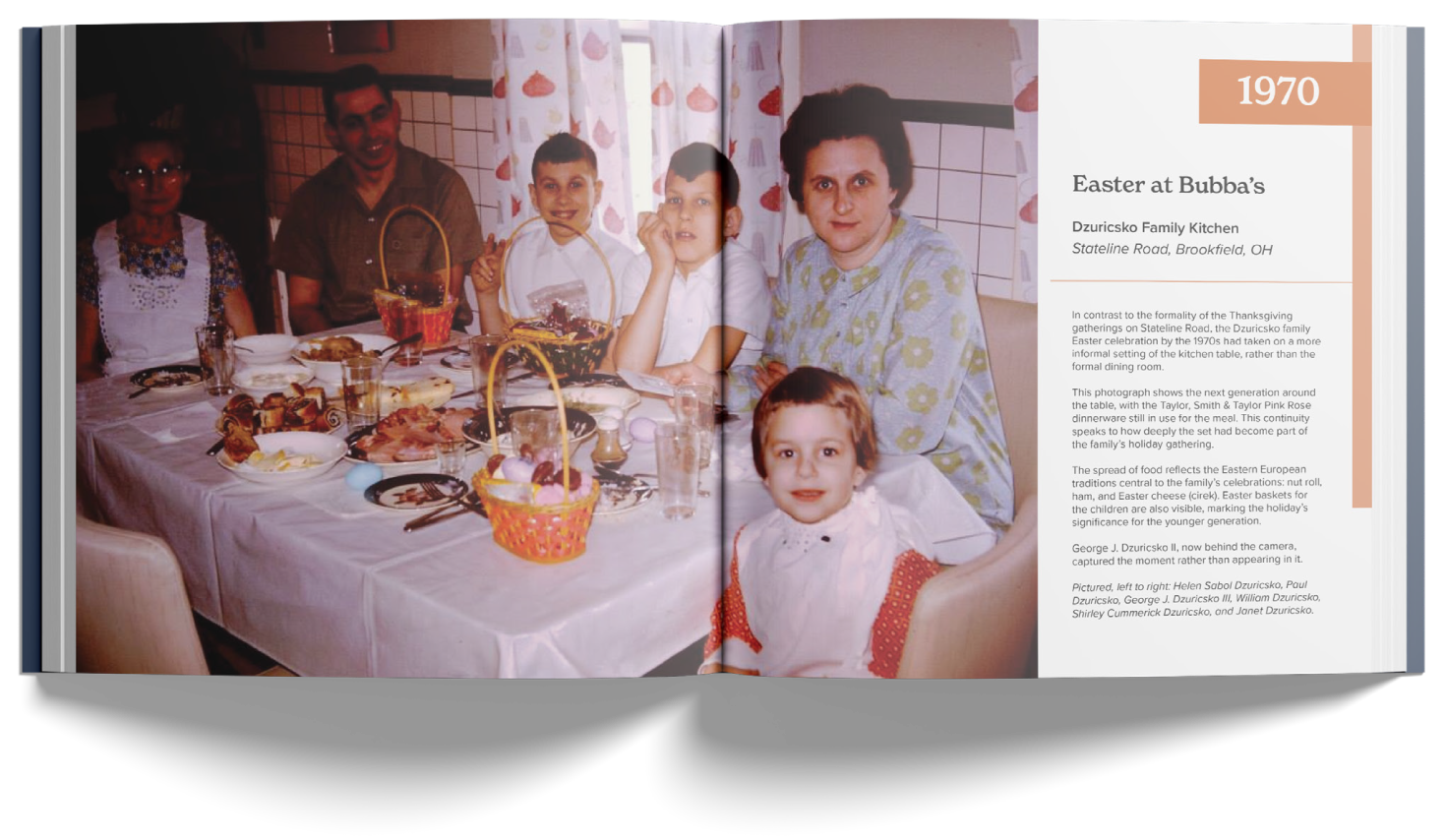
Scrapbook highlighting the same item in different contexts over time relating to specific locations and family memories.
Digital: Heirloom Scrollytelling
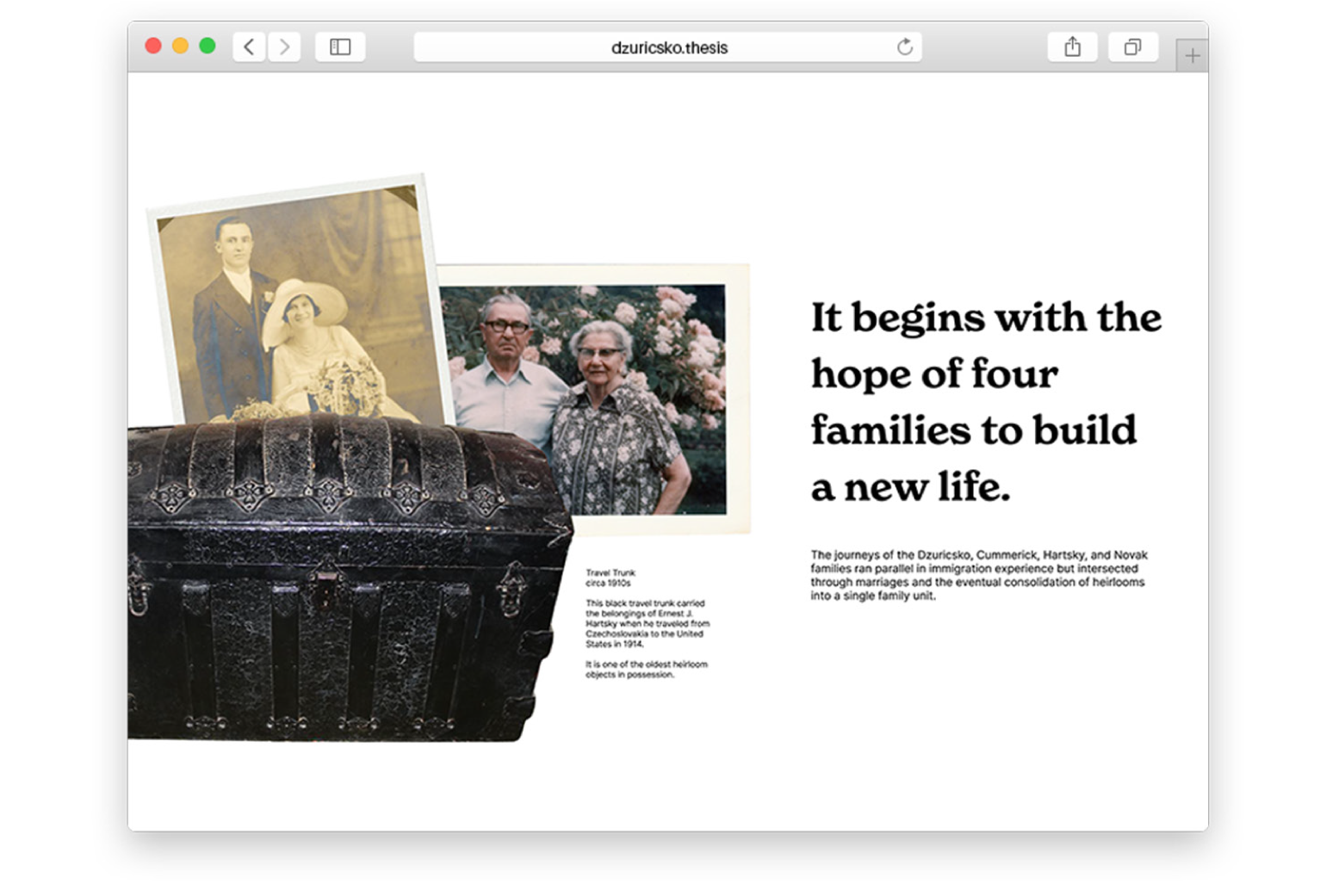
Opens with immigration context and emotional framing before handing control to the reader through filters, clickable objects, and timeline navigation. Structure first, exploration available.
Physical Exhibition: Heirlooms that Connect Us
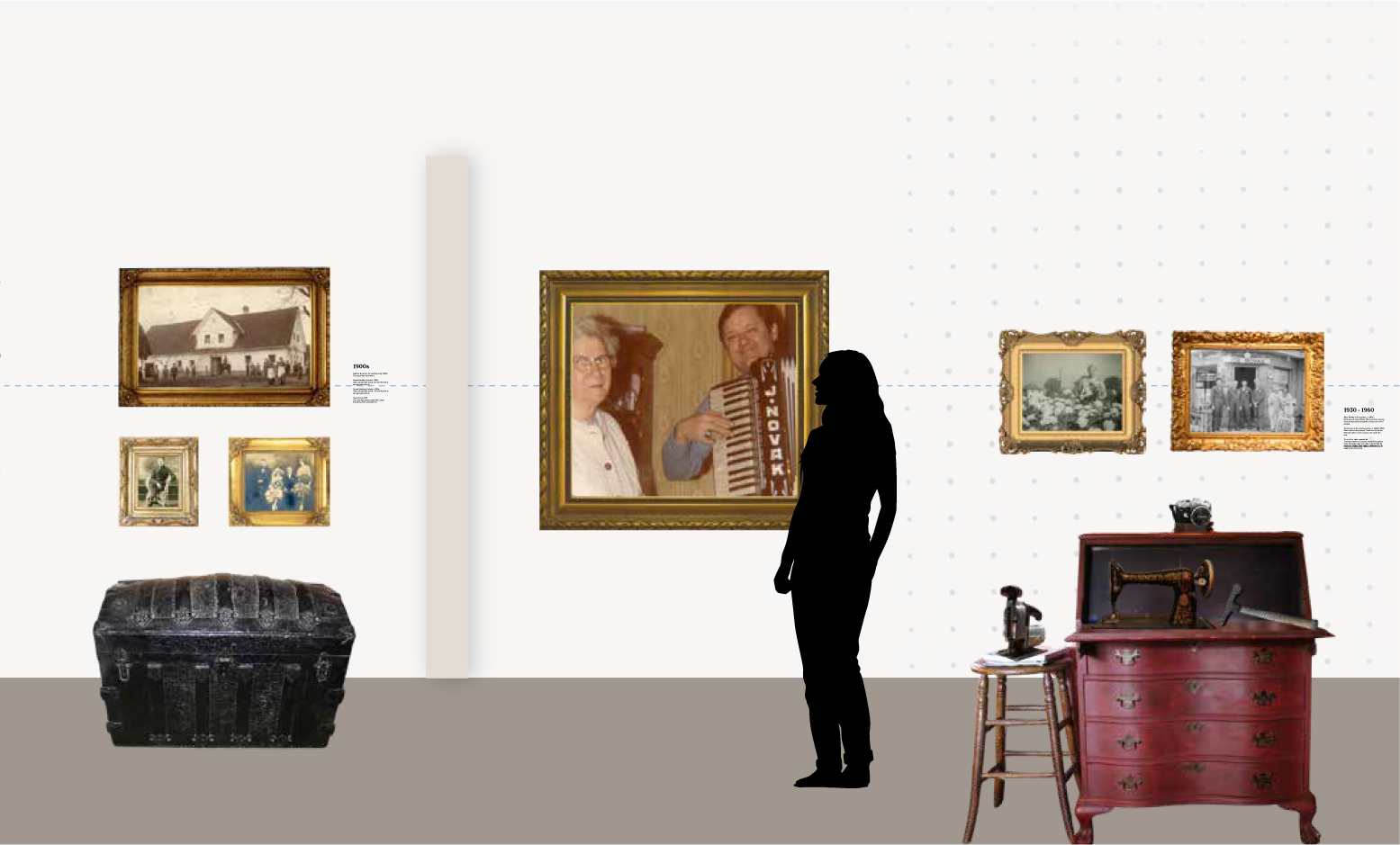
Thematic and chronological assemblage of heirlooms in a physical environment that suggests a pathway without enforcement. Video adds immersion.
OUTCOMES AND REFLECTION
From Objects to Insights
Three findings emerged from this work that extend beyond this project. First, the balance between author-driven structure and reader-driven exploration (Segel and Heer, 2010) is medium-dependent; universal principles apply, but their implementation differs entirely across print, digital, and physical spaces. Second, balance cannot be planned in advance; it emerges through making, testing, and careful examination of what the iteration reveals. Third, visual form is a research method, building visualizations that surface patterns that data analysis alone could never.
On a personal level, this project became its own kind of heirloom. The process of documenting, interviewing, and visualizing four generations of family objects created something new to pass down, a record of not just what was kept, but why it mattered and who it connected.
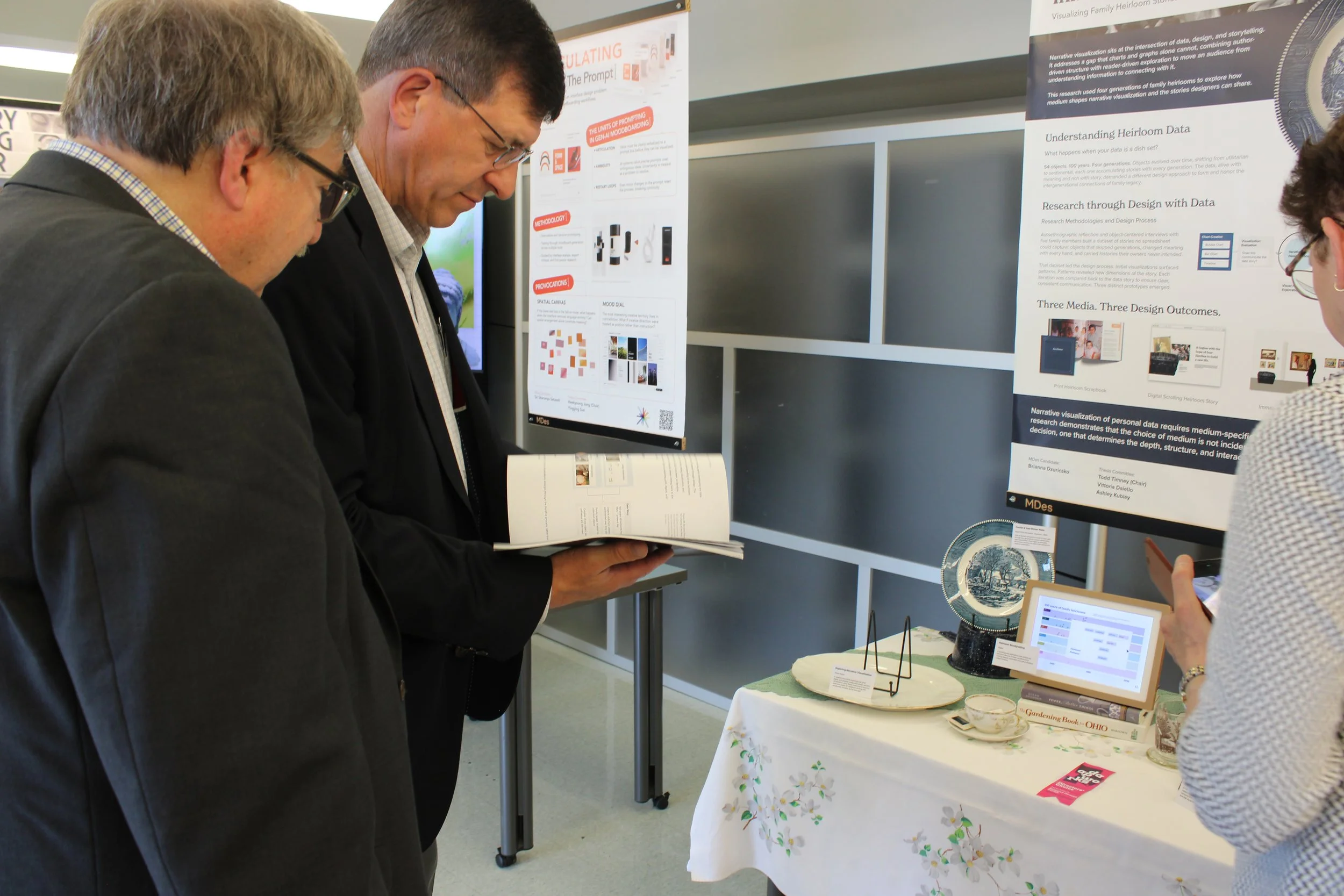
Inherited Memories: Visualizing Heirloom Stories was awarded Director's Choice at the 2025 DAAP Master's Thesis Exhibition.